The ICC is under attack. Ukraine’s special tribunal must not be allowed to fail
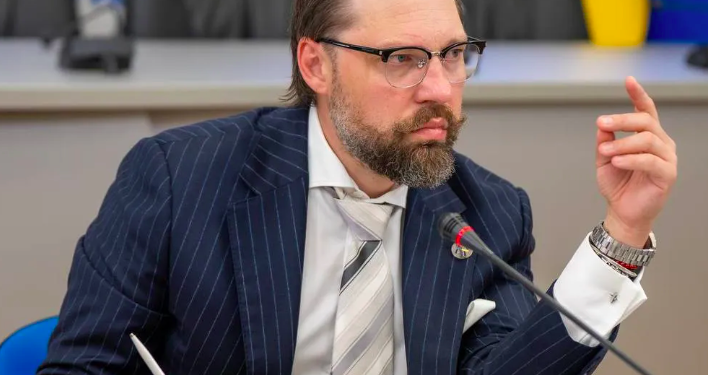
Oleksii Shevchuk, advocate, Finalist for Ukraine’s nomination to the International Criminal Court (ICC) as a Judge
The international criminal justice system is facing one of its most consequential tests since the adoption of the Rome Statute. Its outcome will determine not only whether Russia’s leaders can be held accountable for the aggression against Ukraine, but whether powerful states can again conclude that war, occupation and mass violence carry no meaningful personal consequences.
For years, Russia has pursued a systematic campaign to discredit the International Criminal Court. That campaign has intensified as the possibility of individual accountability for the invasion of Ukraine has become more real. It is expressed through political pressure, information operations, legal arguments designed to deny the court’s reach, attacks on the legitimacy of international institutions and attempts to turn concern for sovereignty into a shield for impunity.
The pressure on the ICC should not be understood as an isolated institutional dispute. It is part of a broader struggle over whether international law applies when the alleged perpetrators are senior officials of a nuclear-armed state with global influence. Russia’s objective is clear: to ensure that Vladimir Putin and the political and military leadership responsible for the war against Ukraine are never brought before a court.
The removal of the ICC prosecutor, Karim Khan, from his duties amid the controversy surrounding the court’s work, together with withdrawals or threatened withdrawals from the Rome Statute system by states including Mali, Niger and Venezuela, sends a worrying signal. Every institutional crisis, every public attack on the court and every retreat from the principle of international criminal accountability is exploited by those who have the greatest interest in weakening the system.
The danger is not merely reputational. The ICC depends on political support, state co-operation, arrest warrants, access to evidence and the willingness of governments to uphold its decisions even when doing so is inconvenient. A court without enforcement capacity cannot function effectively. And a court whose legitimacy is repeatedly questioned by states, politicians and well-organised disinformation networks becomes easier to ignore.
For Ukraine, this makes the establishment of a special tribunal for the crime of aggression an urgent necessity.
The ICC’s role remains indispensable. Its investigations into war crimes, crimes against humanity and genocide are essential for victims and for the preservation of evidence. But the crime of aggression presents a distinct legal and political problem. It concerns the decision by a state’s leadership to launch an illegal war. It is therefore directed at those who planned, prepared, initiated or executed the invasion: the highest political and military authorities of the aggressor state.
This is precisely why a special tribunal is needed. It should focus specifically on Russia’s aggression against Ukraine and establish individual criminal responsibility among those who made the decision to unleash the war. The tribunal would not replace the ICC. It would complement it by addressing the jurisdictional gap that has prevented existing international mechanisms from fully prosecuting the leadership crime at the heart of the conflict.
The stakes could hardly be higher. If Russia succeeds in evading responsibility for aggression, it will reinforce a message already heard far too often in international affairs: that international law is binding on weaker states but negotiable for stronger ones. Such an outcome would encourage future aggressors, undermine the prohibition on the use of force and weaken the basic security architecture established after the second world war.
The special tribunal is therefore not a symbolic project. It is a practical legal mechanism intended to protect the principle that borders cannot be changed by force and that political leaders cannot hide behind state power when they authorise an unlawful war.
There are already efforts to discredit this idea. Critics argue that the tribunal would be selective, politically motivated or incompatible with international law. These arguments must be addressed seriously, but they should not become excuses for paralysis. Every international court operates in a political environment. That does not mean its work is illegitimate. The appropriate response is to ensure that the tribunal has a clear legal basis, robust procedural guarantees, independent judges, fair-trial protections and a credible institutional structure.
The alternative is not neutrality. The alternative is impunity.
The debate also exposes a wider problem within international criminal justice. The ICC has faced persistent criticism over its historical concentration on African situations. These concerns deserve respect: international justice cannot be credible if it is perceived as unevenly applied, or as a system in which some regions are subjected to scrutiny while the conduct of powerful states receives insufficient attention.
But the answer is not to weaken the ICC or to reduce its work further. It is to strengthen the universality of its mandate.
The ICC is not an “African court”. It is a court designed to deal with the gravest crimes wherever they occur, when national jurisdictions are unwilling or unable genuinely to prosecute. Its legitimacy depends on demonstrating that its principles apply across regions and against all perpetrators, regardless of geopolitical status.
Russia understands the political importance of this debate. Its growing influence in parts of Africa is not only economic or military; it is also diplomatic and informational. By presenting international criminal justice as a western political instrument, Moscow seeks to build support for a broader narrative: that accountability mechanisms are selective, colonial and therefore disposable.
This narrative is powerful precisely because it exploits real frustrations and historical grievances. European states cannot counter it merely with statements of principle. They must demonstrate, through consistent conduct, that international law is not a tool to be used only against political opponents. Supporting accountability for Ukraine while ignoring atrocities elsewhere would weaken the very cause they claim to defend.
The future of the ICC and the future special tribunal for Ukraine are therefore connected. Both depend on the same principle: no leader should be above the law.
Sanctions against ICC officials, political attempts to limit the court’s jurisdiction and campaigns questioning its authority are not technical disagreements. They are attacks on the idea that international crimes require an international response. If those attacks succeed, the consequences will extend far beyond Ukraine.
Ukraine’s struggle for accountability is not only about the past. It is about the rules that will govern future wars. A credible special tribunal for the crime of aggression would show that the decision to launch a war of conquest is not an act beyond legal reach. It would preserve the possibility that even the most powerful decision-makers may one day be called to account.
Europe, Ukraine and states committed to the international legal order must not allow this track to be abandoned. The ICC must be defended, reformed where necessary and given the political support required to fulfil its mandate. At the same time, the special tribunal must move from political discussion to institutional reality.
Justice may be delayed by war, power and diplomacy. But it must not be defeated by them.